Category: News

AI as a “force multiplier” in building capacity to assist amputees?

AI as a “force multiplier” in building capacity to assist amputees?

Amputees often face a long and unpredictable journey from stabilisation to rehabilitation. This is never more so than at the start of the journey when the medical priority may be to keep them alive. However, decisions made in those first few hours can have a huge impact further along the line. The idea that rehabilitation should begin at hour zero, maybe a challenge for a paramedic evacuating a patient or a frontline medical team at the limits of their capacity.

Every case is different, each patient following their own track with different degrees of mobility, confidence and complications to deal with. Operational artificial intelligence can help alert the team as to the critical risk or issues affecting the patient’s longer term rehabilitation. Being able to analyze patient data in real time to predict complications and facilitate early interventions, potentially reducing complications and improving recovery rates, could be transformation in conflict affected regions where medical resources are strained.

Such data can provide care insights which can improve the integration of emergency response team’s interventions into the longer term care for trauma patients. This can be especially significant with patients dealing with limb loss or amputation, and AI based alerts can encourage practitioners to take a more holistic approach to patient care, bringing in specialists to help address risk factors or actual complications in a more timely fashion.

Tracking information, during this journey or “longitudinally”, can help predict when these people will be unwell or ready to move on to the next stage of their support.

This information can also be shared with both the patient and the management team and carers to help provide a more consistent level of support in stretched health systems that may be struggling to meet urgent demands or trying to provide more comprehensive support to a system where services were “isolated” around traditional medical specialisations.

One organization following this approach is Cera founded by Dr Ben Maruthappu and now one of Europe’s largest providers of digital healthcare at home.


Cera caregivers and nurses collect patient symptom information and health data during home visits, using artificial intelligence algorithms to predict deterioration before it happens, initiating early health interventions to prevent deterioration. The approach helped them:

· decrease in hospitalization rate by an unprecedented 52%

· up to 80% of hospitalizations were predicted seven days in advance

· reduction of patient falls by ~17%

· reduction of urination problems by ~47%

· reduction of infections by ~15%

· helped improve medication and prescription adherence in elderly patients by 35%.

In the United States, the Veterans Health Administration (VHA) is using operational artificial intelligence to improve the quality of care for veterans.


For example, the VHA uses artificial intelligence to identify patients who are at risk of developing chronic diseases.

Limb loss or amputation can have a significant impact on a person’s physical and mental health and often requires a multidisciplinary approach to treatment and care.

Health and care system integration can help ensure that these patients receive comprehensive and coordinated care across multiple healthcare providers and settings.

Below are a few examples of how operational AI can accelerate the integration of health and care for patients affected by limb loss or amputation:

Prosthetic Limb Design and Customization: Artificial intelligence can be used to analyze data from patient assessments, medical images, and other sources to create a personalized design and fit for a prosthetic limb. This can improve patient outcomes by ensuring that the prosthesis fits well and functions effectively right from the start. This becomes more important with the distributed care model https://www.lsngroup.org/post/shaping-the-future-of-amputee-care-innovation-and-accessibility-in-prosthetic-services ,

where the clinics may have fewer specialists and rely on remote experts to make the best use of the team’s skills and local resources.

Artificial intelligence has the potential to accelerate the integration of health and care for patients affected by limb loss or amputation by supporting the personalized design and customization of prosthetic limbs, physical therapy and rehabilitation, pain management and mental health support.

However, it is important to ensure that AI is implemented responsibly and ethically, and that patient privacy and safety are maintained throughout the process.


Continue reading

From being an injured veteran to becoming a catalyst for a more inclusive society

From being an injured veteran to becoming a catalyst for a more inclusive society

Supporting disabled veterans in post-conflict countries is essential not only for their individual well-being but also for fostering inclusive societies, economic development, peacebuilding, and stability. It is an investment in the future of the nation, ensuring that the aftermath of conflict is transformed into a sustainable and peaceful environment for all.

While we are focusing on long-term strategies to ensure justice, inclusion and lasting peace, we also have at the front of our thinking the highly acute short-term pressures faced by individuals and institutions as a result of this war. And more specifically how the right short-term intervention can provide a clear pathway to sustainable peace.

Supporting disabled veterans is crucial for rebuilding countries and ensuring peace in conflict-affected nations for several reasons:

Upholding Human Rights: Disabled veterans have often sacrificed their physical and mental well-being while serving their country. Supporting them is a matter of upholding their fundamental human rights and ensuring they receive the care and assistance they need to lead dignified lives.

Redefining ‘rehabilitation’: The physical toll on disabled veterans is regrettably clear to see. What is less clear and equally significant are the mental scars. Rebuilding minds and bodies is essential to post-conflict Ukraine. PTSD among veterans is affecting and will affect a great many people throughout their lives. Understanding and treatment of this condition is vital to our understanding of long term rehabilitation.

Inclusive Rebuilding: Disabled veterans are an integral part of post-conflict societies. By providing support, countries can promote inclusivity and ensure that all segments of society, including those with disabilities, are included in the process of rebuilding. This inclusivity fosters social cohesion and reduces the potential for further conflicts based on marginalisation and exclusion.

Expertise and Skills: Disabled veterans often possess unique skills and expertise gained during their military service. By harnessing their knowledge and experiences, countries can tap into a valuable resource for reconstruction efforts. These veterans can contribute to various sectors, such as infrastructure development, healthcare, and education, which are vital for rebuilding societies.

Economic Development: Disabled veterans, when provided with the necessary support and rehabilitation, can become active contributors to the economy. By empowering them through vocational training and employment opportunities, countries can foster economic growth and stability. This, in turn, reduces the likelihood of societal discontent, unemployment-related grievances, and potential sources of conflict.

Peacebuilding and Stability: Disabled veterans are often well-respected figures within their communities. By supporting them, countries demonstrate their commitment to peace and stability. These veterans can serve as powerful agents for peace building, using their influence to promote reconciliation, bridge divides, and prevent future conflicts.

Moral Obligation: Providing support to disabled veterans is a moral obligation for nations that have sent their citizens to fight in conflicts. These veterans have made significant sacrifices on behalf of their countries, and it is incumbent upon societies to honour their service and ensure their well-being.

It is people who have lived through this experience that can talk about the importance of this approach with authority and authenticity that most people will never know. In the first mission, Alex Lewis,

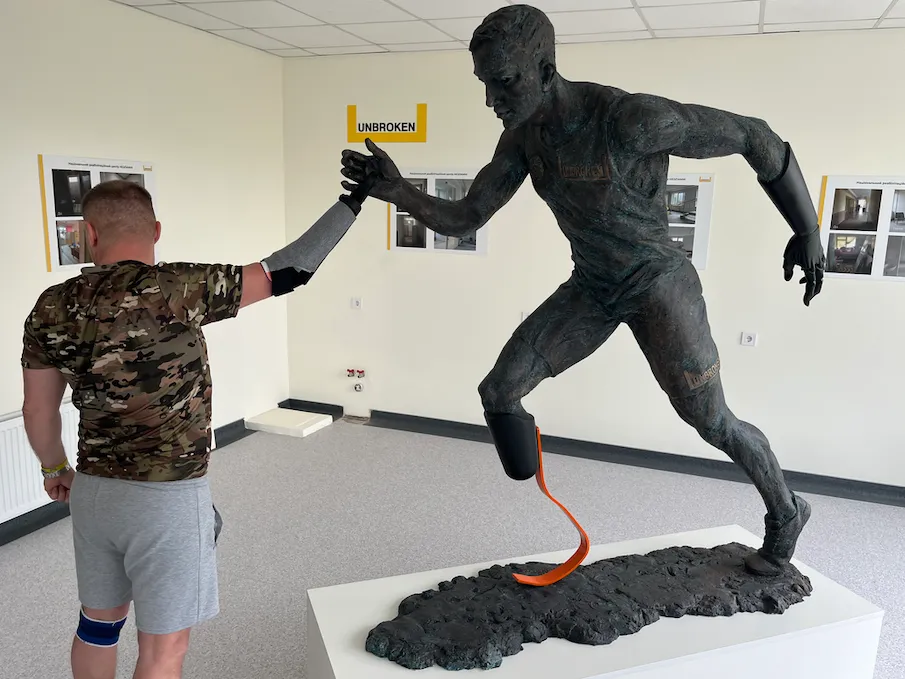
shared his experience of being a quadruple amputee and using his insights to promote ‘user-led innovation’ as illustrated by the Koalaa soft prosthetic.

In the second mission, Edward Hall, an injured veteran from the UK Army was able to meet recovering amputees in hospitals throughout the Lviv region and talk to them as a peer who had experienced his own long journey to recovery, and a new life beyond the army.

In this third mission, we are working with Mike Wildeman on creating opportunities for amputees and the role they can play in promoting a more inclusive, resilient society. https://www.lsngroup.org/post/re-finding-purpose-and-creating-opportunities-for-amputees

Our British veterans see no boundaries when it comes to the rehabilitation of those injured by war. They will continue to make the case to UK based charities to support overseas veterans. UK veterans, with their vast experience and expertise can be a key part of building a lasting and sustainable peace for Ukraine.


Continue reading

Rehabilitation Starts at Time Zero

Rehabilitation Starts at Time Zero

The war in Ukraine has created an urgent need to find better ways to manage mass casualties, using the knowledge gained from conflict around the world. There is a need for reimagined pathways that create a more streamlined rehabilitation journey and results in better outcomes for the injured in a more cost-effective, resource and time-efficient way. At a time when Ukraine is stretched beyond limits and is dependent on external generosity, ways of enhancing the journey need to be sought.

Recovery has to start from the moment a person is injured. Getting it Right First Time means resuscitation, life-saving interventions and early surgery have to be coordinated and planned before the trauma occurs; from the frontline to distant rehabilitation centres.

The rehabilitation journey can start as soon as the patient is stabilised, offering an opportunity to take the first step on that long journey to independence. Early interventions impact the pathway and can dramatically shorten the journey as well as improve the final outcome. These interventions may be as simple as where the tourniquet is placed on the limb, to the nutritional status of the individual. Simple, good primary care and an integrated, joined-up approach to managing the care pathway, can make all the difference in reducing the number of complicated cases that then require much more complex reconstruction and rehabilitation. Cases that can only be managed at the most well-resourced tertiary care centres or at centres of excellence abroad.

However, this requires a multidisciplinary team with a more holistic view of how to support the patient and ensure an integrated approach to future care.

Building independence early is crucial in the rehabilitation journey of an amputee; leading to enhanced quality of life, increased self-esteem, smoother reintegration into society and a reduced burden on caregivers.

Modern thinking and emerging systems are transforming the role of assistive technology in the day to day lives of those living with disability. New ideas in prosthetics have the potential to improve functionality and daily comfort so users are more likely to make best use of their aids

One example of a new technology offering the potential of enhanced rehabilitation is the Koalaa specialist post-op prosthetic. This can be used from as early as 48 hours post-surgery. Fitting within days rather than months can be transformational. A design so simple to fit can make a huge difference to resource efficiency, especially where there may be constraints in terms of a prosthetist’s time and expertise as in the case of Ukraine. Fitting a good prosthetic this early in the rehabilitation journey of someone who has lost a limb can have a significant positive impact on their overall well-being and improve the physical and mental health of the patient. A well fitted prosthetic greatly reduces abandonment rates.

Learning to use a soft prosthetic such as this can occur while physical recovery from the injuries is ongoing. By giving something positive to focus on the individual may be more able to adjust to their new normal and engage more in physical and mental rehabilitation.

The human body has a remarkable ability to adapt and providing a well-fitted prosthetic limb early in the rehabilitation process allows individuals to begin adapting to their new circumstances sooner. Early use of a prosthetic can help retrain the brain, improve muscle strength and coordination, and facilitate the development of new movement patterns. This early adaptation can lead to faster achievement of improved final outcomes.

Following the loss of a limb or part of it the body undergoes significant adaptive changes with loss of muscle bulk and bone density where they are not being called on to function. Early use of a prosthetic limb can minimise these changes and help retain muscle and bone strength resulting in improved function with later prosthetics. The benefits are healthier limbs that retain as much function as possible to make use of aids in later years easier and more effective. Put simply, prevention (of muscle wasting) is better than cure (long term attempts at retraining).

A well-fitted prosthetic can enable individuals to participate in a wide range of activities they enjoyed before limb loss. Whether it’s sports, hobbies, or work-related tasks, having an early prosthetic intervention can help individuals resume their previous activities or explore new ones, leading to a more fulfilling and inclusive lifestyle.

Key benefits of a well-fitted prosthetic limb:

Improved physical function:

• Improved retention of muscle bulk and movement, avoiding the atrophy caused by under use of muscles.

• Enhanced ability to perform daily activities such as grasping objects and performing tasks like eating, drinking or making phone calls.

• Faster adaptation and rehabilitation

• Preservation of musculoskeletal health

Psychological well-being:

• Reduced psychological impact of limb loss. By providing a functional and aesthetically pleasing prosthetic limb early on, individuals can regain a sense of normalcy and improve their self-image.

• This can boost self-confidence, reduce feelings of loss or stigmatisation, and contribute to better long-term mental health.

• Increased participation in daily activities

It is important to note that the specific impact of any intervention is individual specific and dependent on many factors including the limb affected, level of amputation, physical and mental condition before the injury and the sum of other injuries sustained.

The impact of an integrated recovery and rehabilitation programme is optimal only if it involves a multidisciplinary team including doctors, nurses, prosthetists, physical therapists, occupational therapists, and psychologists. Engaging friends and family early and integration of the pathway with joined-up thinking is key.


Continue reading

The first step towards sustainable agricultural production in Ukraine

The first step towards sustainable agricultural production in Ukraine

Prior to February 2022, Ukraine was known as the “breadbasket” of Europe, growing enough food to feed 400 million people through exports, equating to one-tenth of the wheat and half the sunflower oil sold globally. Today Ukrainian farmers are still working tirelessly to supply food both within Ukraine and also to export, with the world’s focus on the UN-brokered grain shipments deal to allow exports without risk of bombing.

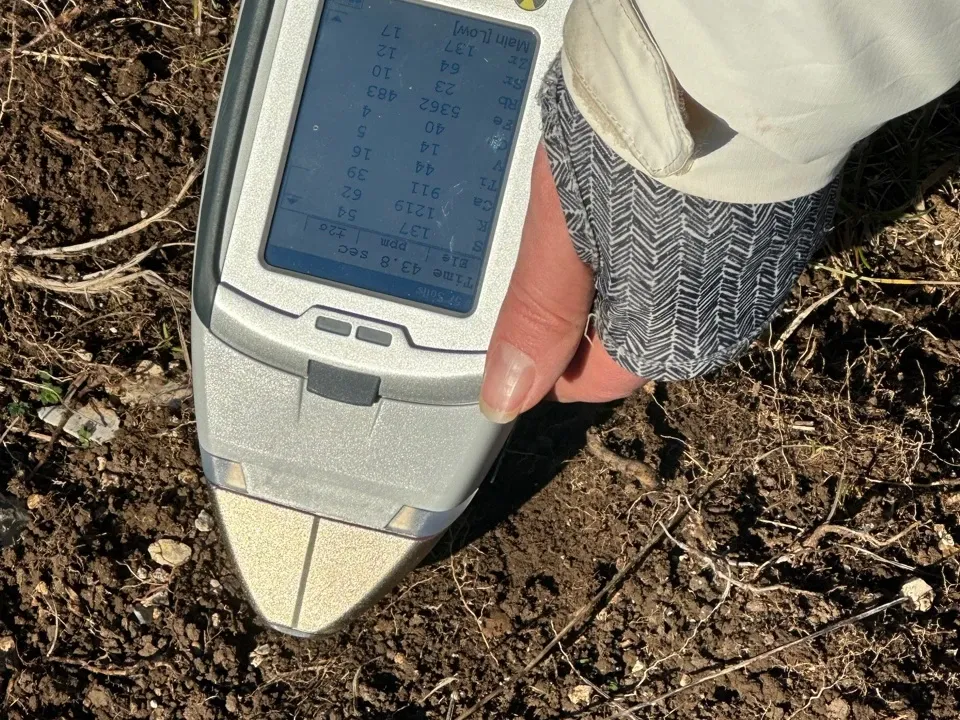
However, due to the war the underlying soil that underpins agricultural production has been degraded to a varying extent across the country. This war degradation can be from obvious causes like mines and bomb craters but can also be due to compaction (from tanks travelling over the land in unsuitable conditions), chemical pollutants (like diesel or heavy metals from shelling) or even just leaving the soil bare which can lead to erosion. As farming during wartime is ongoing, assessment of soil health and remediation should also be immediate and ongoing.

Farmers need to know the level of soil degradation that has occurred on their land both in terms of human health and quality of food within the supply chain, but also to understand what crop yields to expect and look at ways to improve them. This is important both in terms of crop health but also for sustainable agriculture.

If degradation reduces yields to make farming the land unprofitable support will be needed to remediate this land to be able to use it in the future. Links between the Royal Agricultural University and Sumy National Agrarian University began in 2020, with discussions of dual degrees and twinning of the institutions.


This was only made possible as part of the UUKi UK-Ukraine twinning scheme in 2023. Soon after the Russian invasion of Ukraine, Cormack Consultancy Group (CCG), in partnership with Universities UK International (UUKi), established twinning in the hopes of reducing ‘brain drain’, and to further support universities in Ukraine to come out of the crisis with increased resources and skills. As part of this programme, Sumy and RAU have developed a research programme to assess war damage to soil and what this means for the future of agriculture in the region.

Soil health has been the focus of research in recent years as it switches the emphasis from alleviating degradation to improving the soil based on the ecosystem services that it provides. A healthy soil is defined as one that has the continued capacity to function – whether that be to produce food within agriculture, for water filtration and storage or for carbon sequestration and climate change mitigation.

Understanding how to improve and maintain soil function is key to building resilient farming systems that are sustainable enterprises in the long term


Continue reading

Re-finding purpose and creating opportunities for amputees

Re-finding purpose and creating opportunities for amputees

Veterans recovering from severe physical trauma and amputation often are faced with a sense of guilt that they cannot return to their comrades in their units and are faced with uncertainty about their livelihoods and ability to support their families.

Veterans who may have been previously completely missioned focused and then find themselves abruptly removed from the conflict and separated from the shared goal, their unit members and friends are often left completely isolated and possibly suffering survivor’s guilt.

Even when the physical scars have healed and prosthetics may have restored some degree of independence, the psychological trauma can be much longer lasting and difficult to manage. The resulting frustration and difficulty of families understanding what has happened can lead to violent behaviour, addiction and even suicide.

A sense of purpose and opportunity can have a major impact on the prognosis of how an amputee copes with the rehabilitation journey. It can provide a focus, something to look forward to and a reason to be thinking beyond the very immediate, very acute sense of crisis.

In this briefing paper we explore the importance of reskilling amputees and share insights from case studies from around the world, including the UK, Afghanistan and Kosovo.

The challenges facing amputees

Amputees face a range of challenges in their lives, including the physical and emotional impact of losing a limb, the financial burden of rehabilitation and medical care, and the difficulty of adapting to a new reality. We will explore the importance of reskilling amputees and the benefits it brings to both the individual and society.

Regaining a Sense of Purpose

Amputees often struggle with feelings of worthlessness and a loss of purpose after their injury. By learning new skills and re-entering the workforce, amputees can regain a sense of pride and accomplishment, which can have a positive impact on their mental health. Reskilling can also help amputees redefine their identity and find a new sense of purpose beyond their disability.This is something that Mike Wildeman shares in the video below.

Financial Stability

The cost of rehabilitation and medical care can place a significant financial burden on amputees and their families.

Reskilling amputees can help them earn a living and reduce financial stress, improving their quality of life and reducing the likelihood of depression and anxiety.

Additionally, by becoming financially independent, amputees can regain a sense of control over their lives and improve their self-esteem.

Contribution to the Economy

Reskilling amputees can also have a positive impact on society as a whole. By providing them with new opportunities, we are not only improving their lives but also contributing to the economy.

Reskilling can help fill labour or skills shortages in industries that may be struggling to find workers, while also increasing diversity and representation in the workforce. By tapping into the unique skills and experiences of amputees, we can unlock new avenues of innovation and growth.

Injured veterans from the Kosovo Liberation Army were offered priority at the Cisco Networking Academy. With little telecoms infrastructure, the new country was able to reskill soldiers or militia as networking engineers, feeding into what became known as the Internet Project Kosovo.

What is remarkable about this project is the dual return on investment – both financial and social, it provided training and jobs for people with disabilities with priority given to veterans and communications for isolated and insecure communities with limited internet access. Ultimately IPKO became the leading regional telecoms company whose services reach over 98% of the population in Kosovo. It is the second mobile operator in the country, before it was ultimately sold.

Inclusion and the ICRC’s orthopaedic project in Afghanistan

Another example is the ICRC’s orthopaedic project which started in 1988 in Kabul with Alberto Cairo, joining the programme in 1990.

Since 1988, it has grown exponentially and now comprises seven rehabilitation centres across the country. A sense of its scale comes from the number of people that have been supported by this project. 190,000 physically disabled patients have been registered since the start, of whom at least 150,000 receive treatment at one of the centres each year. This highlights the need for a lifetime of support for its people. About one-quarter of them are amputees – mostly victims of mines and explosive remnants of war – while the rest include sufferers of polio, spinal injuries, congenital deformities, cerebral palsy and accident victims, among others. Some of them need treatment for many years, often for the rest of their lives.

One of the most remarkable achievements about the orthopaedic centres is the fact that nearly all the 815 staff themselves have disabilities.

Alberto Cairo commented in an interview

“We implemented this positive discrimination policy from the very start, only employing physically disabled people to work in the centres. It is good for everyone. The staff understand the needs and challenges first-hand, and for the patients, it gives them hope and motivation.”

He noted that this inclusive approach was “hard work at first convincing people this would work – even the ICRC – but I was absolutely determined. Today we are much more focused on inclusion, and I don’t think anyone would reasonably question the logic of what we are doing here now.”

Returning to the air

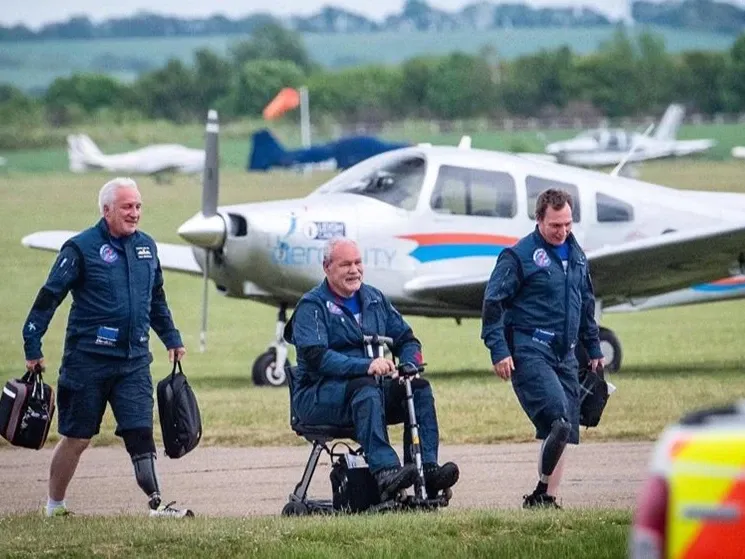
An example of reskilling that may resonate particularly with service amputees, is Mike Wildeman’s story of setting up Team Phoenix with the support of the Douglas Bader Foundation and returning to the skies.

Such examples are rare, but their inspiration can have a much wider impact. Another example from the British military is Captain Jim Bonney who went back through the entire Marines training course at Lympstone, re-qualified as a marine and returned to front line duties. Captain Jim Bonnie ended up commanding the Royal Marines medical rehab unit

Team Phoenix aims is to showcase the abilities of disabled people, to act as an inspiration to the public and to carry a message of inclusivity and diversity.

Mike will be part of an upcoming Q&A when he will share his experience of the journey of an amputee and what it took as an amputee pilot to get up in the air once again. In this he was supported by the Douglas Bader Foundation.

The Douglas Bader Foundation is a charity founded by the family of RAF hero, Sir Douglas Bader to help people affected by limb loss and other disabilities. Douglas Bader himself lost both his legs following a crash in his plane but returned to lead a squadron of Spitfires in the second world war. The Douglas Bader Foundation is a co-sponsor of the upcoming mission to provide support for amputees in Ukraine.


Continue reading

What is soil health and why soil matters in Ukraine

What is soil health and why soil matters in Ukraine

What is the impact of the war in Ukraine on soil health and agricultural productivity?

The war in Ukraine has had a significant impact on soil health and agricultural productivity across the country but particularly in conflict-affected areas. The conflict, which began in 2014, has led to the widespread destruction of infrastructure and agricultural land, displacement of people, and contamination of soil and water resources due to the use of heavy weapons and chemicals.

The conflict has had major impacts on soil health, including increased erosion risk, reduced crop yields and has directly led to the destruction of irrigation systems, drainage channels, and other infrastructure necessary for efficient agricultural production. This has caused soils to become waterlogging and led to salinization of soils in some areas, which can reduce crop yields and make it difficult for farmers to cultivate their land both now and in the future.

The use of heavy weapons such as artillery and tanks has also led to physical damage to soil and vegetation, which can result in soil compaction, increased surface runoff, erosion and loss of topsoil. In addition, the use of chemical agents by both sides in the conflict has further contaminated soil and water resources.

The displacement of people from their homes and farmland has also had a significant impact on agricultural productivity in the region. Many farmers have been forced to abandon their land or have had their crops destroyed by the conflict, leading to a loss of income and food security.

Overall, the war in Ukraine has had a negative impact on soil health and agricultural productivity in the affected areas, with significant long-term consequences for food security and economic development in the region. In this short video, Dr Felicity Crotty from the Royal Agricultural University looks at the nature of soil health and how it has been impacted by the war.

Dr Crotty explores some of the historical challenges Ukraine faced as well as those that have been exacerbated due to the damage from the war.

The key challenge now is to map and characterise the contamination, what remediation approaches might be relevant and how to prioritise land for surveying and returning to agricultural productivity.


Continue reading

Conference on Clean Air for Ukraine

Conference on Clean Air for Ukraine

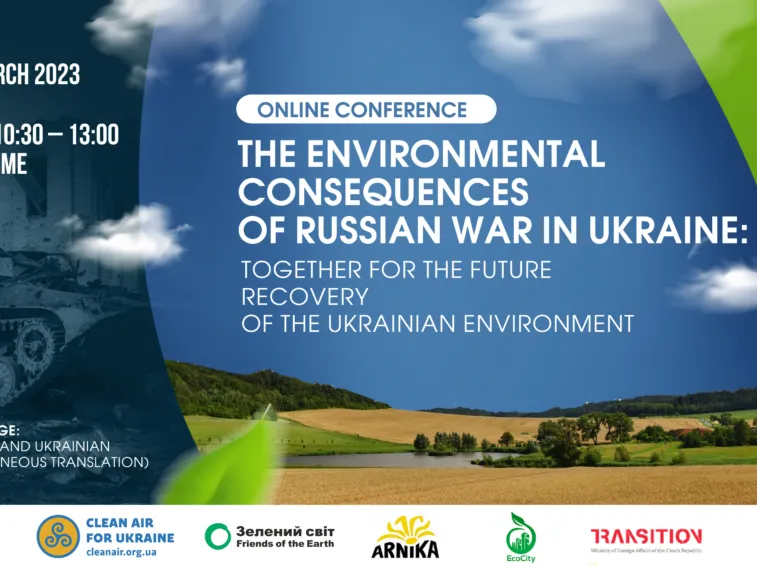
The Conference on Clean Air for Ukraine and the report on “The Environmental Consequences of Russia’s War in Ukraine: Working together for the future recovery of the Ukrainian Environment” highlighted the challenge Ukraine faces as well as the long-term implications for global food security. The conference and report were part of an initiative led by the NGO Arnika (Czech Republic) in cooperation with local civic initiatives in industrial towns of Ukraine with financial support from the Transition Promotion Program of the Ministry of Foreign Affairs of the Czech Republic and the National Endowment for Democracy (USA).

Published on 21. 3. 2023, the report analyses the environmental damage caused by the Russian invasion during the first nine months of the war, between February and November 2022. It includes historical examples of how the environment has been affected by the wars and damage compensation mechanisms are outlined and reviewed in the report.

Although the analysis includes all the territories that have been damaged, the focus is on the Zaporizhzhia, Dnipropetrovsk, and Kharkiv regions; and addressed questions such as:

· What danger do weapons and military equipment pose for the environment?

· How military actions have affected components of the environment (air, water, soil)?

· What forecasts and conclusions can be made regarding the negative impact of the war on the environment in the medium and long term?

· Have there been any recorded war damages (for damage to the environment), following similar conflagrations in the past?

· Does a framework of international mechanisms exist for reparations/compensation for such environmental damage?

· What challenges are faced for the remediation and restoration of such contaminated sites?

· What are the most important environmental issues to be discussed after the war ends and how are these to be prioritised?

· How to combine the post-war recovery of cities and the economy of Ukraine in compliance with international environmental standards and principles of sustainable development?

The report discussed the impact on agricultural land recognising the far-reaching implications for the country’s land and water resources. As a largely agrarian country heavily reliant on agricultural exports, the environmental impacts of the conflict are a serious concern from an environmental, economic and social perspective.

Agricultural land occupies 70.5% of Ukraine’s total area, making the agricultural sector one of the most important for the economy, jobs and the environment. The war has significantly damaged these fields where the fighting has occurred, causing long-term chemical and biological contamination of fertile soils. The hundreds of thousands of fired shells, detonated and burned military equipment, and abandoned materials in fields and forests will remain as a source of contamination of soil and groundwater with heavy metals and their compounds for generations to come.

The situation is aggravated by Ukraine’s water shortage, with harmful substances leaking into groundwater and surface waters. The fertility of the soil is also affected by the mechanical disruption of the ground surface, explosions destroying vegetation and soil cover, causing the soil profile and the hydrological properties of the soil to be degraded.

Each ammunition explosion is a complex mixture of chemicals that settle in the soil layer, suppressing the growth of vegetation for years or decades, and reducing the population of soil animals and bacteria. As plants easily accumulate heavy metals that contaminate the soil after ammunition explosions, it may not be safe to consume agricultural products grown in the fields that have been affected by combat activities.

The impacts of the conflict are not limited to soil and water resources. Human casualties and abandoned bodies also have an impact on the environment, causing mass accumulation of organic and inorganic waste at the territories seized by the military.

The fuel and energy complex, specifically the oil storage facilities and oil refineries, has also been severely damaged, resulting in massive fires and oil leaks into the environment. Oil pollution has a devastating impact on the environment, changing the number and limiting the species diversity of soil meso- and microfauna and microflora.

The ongoing conflict has caused severe disruption to the hydrological regime of the soil, with irrigation systems destroyed, causing a disruption to the hydration regime of the lands. Large areas have been flooded due to the destruction of hydraulic structures and mines, making the water available in such regions poisonous to plants, farm animals, and people.

Protecting valuable land and water resources is vital, and steps must be taken to prevent further environmental degradation caused by the conflict.

The conference raised more questions about how this could be done. The scale and complexity of the contamination mean that there are no easy solutions.Some of the issues that need further investigation include:

· How to harness ‘Citizen Science’ in order to scale environmental monitoring programmes?

· What resources do Ukrainian farmers need to contact if they believe their farmland has been contaminated and needs remediation?

· How is geospatial data collected on environmental contamination and how does this link into data on mines and UXO?

Some of the highlights of the conference were the large number of countries and organisations sponsoring or carrying out environmental work in Ukraine and thus the importance of collaboration and coordination. That requires active monitoring of who is doing what and communicating both internally and externally.

The acuteness of the challenge and intensity of environmental monitoring will undoubtedly lead to innovations and advances in the science behind approaches and protocols being used. Effective research and as well as any training programme need to be linked in to what is already going on and be closely coordinated with the Ukrainian military and both regional and national Governments.


Continue reading

Support for amputees in Ukraine and the spirit of Merlin

Support for amputees in Ukraine and the spirit of Merlin

Merlin was set up to find new ways of providing emergency medical relief in places regardless of how remote or how difficult they proved to work in, and then explore ways of ensuring a last legacy of a stronger healthcare system.

This short video from 2005 describes some of the programmes shortly after Merlin was created, and before it became part of Save the Children.

A key component of the Merlin approach was to work with local people and build their capacity to support and work with the existing healthcare systems. This was illustrated by the ‘Spirit of Merlin’ award that we celebrated at the event to mark the first ten years of Merlin. This award went to Dr Aniru Conteh in Sierra Leone for his work on Lassa fever and its relevance to haemorrhagic fever outbreak response. This led to the Lassa Fever Initiative

It is those values that are behind our approach to work with local partners in Ukraine , to strengthen the support to victims of trauma and particularly amputees.

This has involved new collaborations, working with Alex Lewis of the Alex Lewis Trust. Alex is a quadruple amputee and Dr Geoff Watson – a trauma specialist to build on the insights they have gained from Alex’s journey from infection and trauma through to becoming an explorer and champion of research into assistive technologies. https://www.itv.com/news/meridian/2023-02-14/quadruple-amputee-heads-to-war-torn-ukraine-to-help-those-who-have-lost-limbs


Continue reading

Driving innovation through amputee led, collaborative university research

Driving innovation through amputee led, collaborative university research

Imagine a world where everyone has access to the assistive technology (AT) they need to improve their lives. Unfortunately, the reality is that only a fraction of the 2.5 billion people globally who need AT have access to it, with the situation being worse in low-income countries where only 10% of people have the AT they need. This is where ATscale comes in, a global partnership for AT with a mission to transform people’s lives by enabling an additional 500 million people to get the life-changing AT they need.

To achieve this, there needs to be a massive innovation in both the products and systems needed to deliver and support such technology for so many people. That’s where universities come in! Collaborative university research is essential for driving innovation in the prosthetics industry. By bringing together experts from different disciplines such as engineering, material science, and biomechanics, new approaches to old challenges can be explored. Better still is when it is possible to bring amputees into the design process, enabling them to be a source of ideas for development or even lead the initiative.

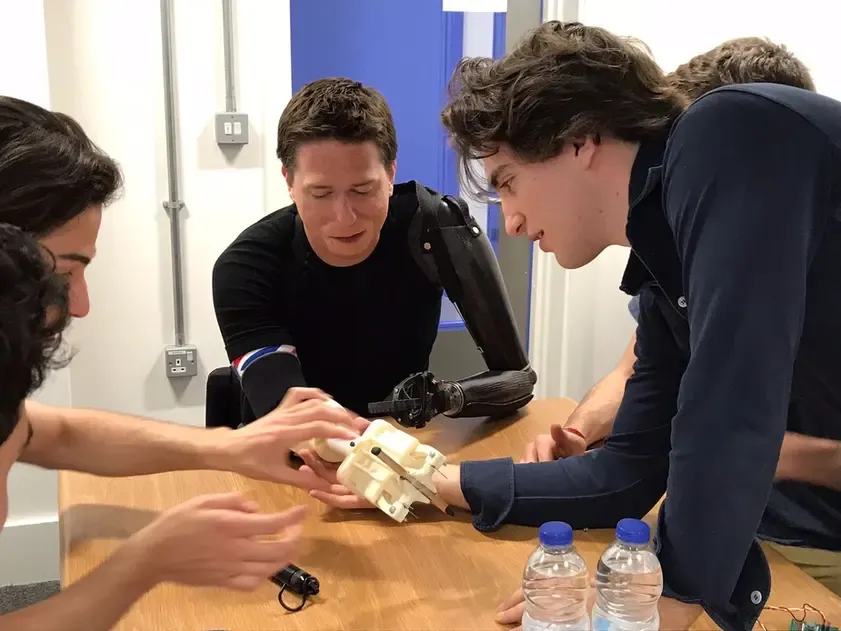
One example of someone who has done that, has been quadruple amputee Alex Lewis who is credited in being part of a wide range of innovations involving start ups and university spin-outs. Take the example of Koalaa, which licensed the soft prosthetics technology of Mitt Wearables incubated in Imperial College’s Advanced Hackspace which became a focal point for variety of student led projects in this field.

Collaborative innovation in prosthetics can take many forms, from sponsoring research projects at universities to developing joint research projects with industry partners. By working with universities, prosthetics companies can access the latest research findings and developments, helping them to develop new materials, manufacturing techniques, and devices. Virtual meetings can help connect up different universities helping them to share their insights and expertise. In the workshop below, Alex Lewis shared his experience along with presenters from Bristol and Southampton Universities in the UK, with medical centres across Ukraine.

Moreover, university collaboration fosters a culture of innovation within prosthetics companies. By working with academics and researchers, companies gain new perspectives and approaches to problem-solving and can learn from the latest research findings and developments. This helps to drive innovation within the company, leading to the development of new and more accessible or advanced prosthetic devices.

Another example is the partnership between Ottobock and the University of Strathclyde in Scotland, which has led to the development of a joint research centre focused on the design and development of advanced prosthetic devices.

Of course, there are some challenges associated with university collaborations. Companies may be more interested in maximizing profits from new development, while universities may be more focused on accessibility. To address these issues, initiatives such as the Rockefeller Foundation have supported more creative management of intellectual property and public-private partnerships to enable profitable new product development and broader market access.
In conclusion, collaborative university research is can play a powerful role in or creating an innovative ecosystem in the prosthetics industry. It enables companies to access the latest research findings and developments, reduces risk, lowers costs, and fosters a culture of innovation.

Stories like that of Alex Lewis – quadruple amputee, designer and adviser to university groups are important sources of inspiration for universities – as well as amputees who wish to play a more direct role in designing a better future. Collaborative innovation in prosthetics is critical in developing more advanced assistive technology as it is for at more accessible prosthetic devices for the millions of people who need them. Let’s work together to drive innovation and transform lives through AT.


Continue reading

Caring for injured veterans – a comparison between the US and the UK: what can Ukraine learn?

Caring for injured veterans – a comparison between the US and the UK: what can Ukraine learn?

In a recent mission to Ukraine, a frequent question was about the care pathways for victims of trauma in the US and the UK. However neither the US nor the UK offers a blue print to address the challenges that Ukraine currently faces, but in both countries, systems have evolved to care for the veterans of the wars in Iraq and Afghanistan from which valuable insights may be learnt. Remarkable successes have been seen in the arenas of the Invictus games and the ParaOlympics, but huge challenges remain in making support as accessible as possible, and to adapt to the changing needs of veterans as they grow older or for those able to return to work, finding purpose.

The rehabilitation pathway for injured veterans can vary between the UK and the US, but both countries offer various programs and services to support the physical, emotional, and social well-being of their veterans.

In the UK, the National Health Service (NHS) provides medical care and rehabilitation services to veterans. The Veterans UK organization, part of the Ministry of Defence, provides financial support, pensions, and welfare services to veterans. The Ministry of Defence also operates a program called the Armed Forces Compensation Scheme, which provides compensation for injuries or illnesses caused by service. In addition, the Royal British Legion provides a range of services, including financial assistance, employment support, and housing.

In the US, the Department of Veterans Affairs (VA) provides a wide range of medical, rehabilitative, and support services to eligible veterans. These services include medical care, prosthetics, mental health care, and vocational rehabilitation and employment services. The VA also operates a disability compensation program that provides benefits to veterans who were injured or became ill as a result of their military service. In addition, various nonprofit organizations provide assistance to veterans in areas such as education, housing, and employment.

While there are differences between the rehabilitation pathways for injured veterans in the UK and US, both countries have a strong commitment to supporting their veterans and providing the resources they need to lead fulfilling lives after their service.


The Veterans Places Pathways and People programme in the UK

The Veterans’ Places, Pathways and People (VP3) program in the UK is a government-funded initiative that aims to provide supported accommodation, education, and employment opportunities for veterans who are homeless or at risk of homelessness. The program is delivered by a consortium of military charities and housing providers, including Stoll, The Beacon, and Veterans Aid.

The VP3 program provides a range of services, including accommodation, practical support, and access to education and employment opportunities. Veterans are assigned a case manager who works with them to develop a personalized plan to help them achieve their goals. The program also provides support with issues such as mental health, substance abuse, and financial management.

 

How successful has the Veterans’ Places, Pathways and People programme been in the UK?

The Veterans’ Places, Pathways and People (VP3) programme in the UK has been successful in providing critical support to homeless and at-risk veterans, helping them to achieve greater stability and independence in their lives.

One of the key measures of success for the VP3 programme is the number of veterans who have been helped. As of 2021, the programme has supported more than 1,000 veterans across the UK. This includes providing housing, employment support, and access to education and training opportunities. The cost of the programme was about £6m.

Another measure of success is the impact that the programme has had on the lives of the veterans it serves. According to a report by the Centre for Social Justice, veterans who participated in the programme were more likely to find permanent accommodation and employment and had better mental health outcomes compared to veterans who did not receive the same level of support. The report also found that the programme was cost-effective, with savings in areas such as health and criminal justice costs.

In addition, the VP3 programme has received positive feedback from the veterans it has served. Many have reported that the support they received through the programme has been life-changing, helping them to rebuild their lives and regain a sense of purpose and direction.

Overall, the VP3 programme has been successful in providing critical support to homeless and at-risk veterans in the UK, helping them to achieve greater stability and independence in their lives.


What could Ukraine learn from these programmes?

There are several lessons that Ukraine could potentially learn from the care pathways in the UK and the US when it comes to supporting its injured veterans.

Some of these lessons include:

1. Providing Comprehensive Support: Both the UK and the US offer comprehensive support for injured veterans, including medical care, rehabilitation services, employment training, and mental health support. Ukraine could learn from this approach and work to establish a similar comprehensive support system for its veterans.

2. Coordinated Care: In both the UK and the US, injured veterans receive care through a coordinated system that involves multiple providers, including the military, the Department of Veterans Affairs, and civilian healthcare providers. Ukraine could work to establish a similar coordinated care system that ensures veterans receive the support they need from all relevant providers.

3. Long-term Support: The UK and the US provide long-term support for injured veterans, recognizing that their needs may change over time. Ukraine could learn from this approach and work to establish long-term support programs that ensure injured veterans have access to the support they need for as long as they need it.

4. Research and Innovation: Both the UK and the US invest heavily in research and innovation to improve care for injured veterans. Ukraine could learn from this approach and invest in research and innovation to improve its care pathways and ensure that veterans receive the best possible care.

5. Public Awareness: Both the UK and the US have made significant efforts to raise public awareness about the needs of injured veterans and the support available to them. Ukraine could learn from this approach and work to increase public awareness about the needs of its veterans and the support available to them.

Overall, Ukraine could potentially benefit from adopting some of the strategies and approaches used in the UK and the US to support its injured veterans. However, it’s important to note that every country’s situation is unique, and it will be necessary to tailor these approaches to Ukraine’s specific needs and context. In Ukraine’s case the scale of the challenge is so much greater and resources so stretched that it will require innovative thinking and bold ideas to ensure even the most basic needs are as accessible as possible.


Continue reading

Environmental Devastation of War: The Impact on Ukrainian Farms and food security

Environmental Devastation of War: The Impact on Ukrainian Farms and food security

War and conflict have devastating effects on the environment, as is evident from the ongoing conflict in Ukraine. The presence of exploded and unexploded munitions, chemical spills, and heavy weapons has caused critical environmental damage to Ukrainian farmland, threatening global food security.

Ukraine is the world’s biggest exporter of sunflower oil (accounting for about 50% before the war. It was the third largest exporter of corn, barley and rape seed accounting for about 11% of world production. It accounts for 8.5% of the world’s wheat making it the fifth most significant source. The World Food Programme estimate that about 400 million people rely on Ukraine for their food supply. One consequence of the war has been a worldwide rise in prices of foodstuffs.

The consequences of the war on the environment in Ukraine are widespread and long-lasting, affecting future generations of the region. 55% of Ukraine’s land is arable, and before the war this contributed to 12% of the GDP and as much as 20% if one includes the food processing industry. Agricultural products were Ukraine’s most important export in 2021, totalling $27.8 billion.

The agricultural sector provided employment for 14% of Ukraine’s population.

The environmental challenges faced by Ukrainian farms and farmland due to the conflict include water pollution, soil contamination, deforestation, wildlife loss, and air pollution. These challenges have significant economic and health consequences, with long-term exposure to hazardous chemicals and pollutants likely to lead to chronic illnesses among civilians and military personnel.

While there are mechanisms for reparations and compensation for environmental damage caused by war and conflict, their effectiveness is limited. Factors such as the difficulty of assessing and quantifying environmental damage, the lack of political will to provide compensation, and challenges in implementing reparations programs in conflict-affected areas contribute to these limitations.

The urgent need to decontaminate Ukrainian farmland and prevent further environmental damage highlights the importance of mapping, monitoring, and prioritizing the remediation of farmland.

In a future blog, we will delve deeper into the particular challenges of addressing farmland remediation and its implications for food security.

It is crucial to acknowledge the devastating impact of war on the environment and take concrete steps to mitigate its consequences. By doing so, we can protect the natural resources of conflict-affected regions and support the health and well-being of affected communities.


Continue reading

Geospatial Analysis: Understanding the Environmental Impact of the War in Ukraine

Geospatial Analysis: Understanding the Environmental Impact of the War in Ukraine

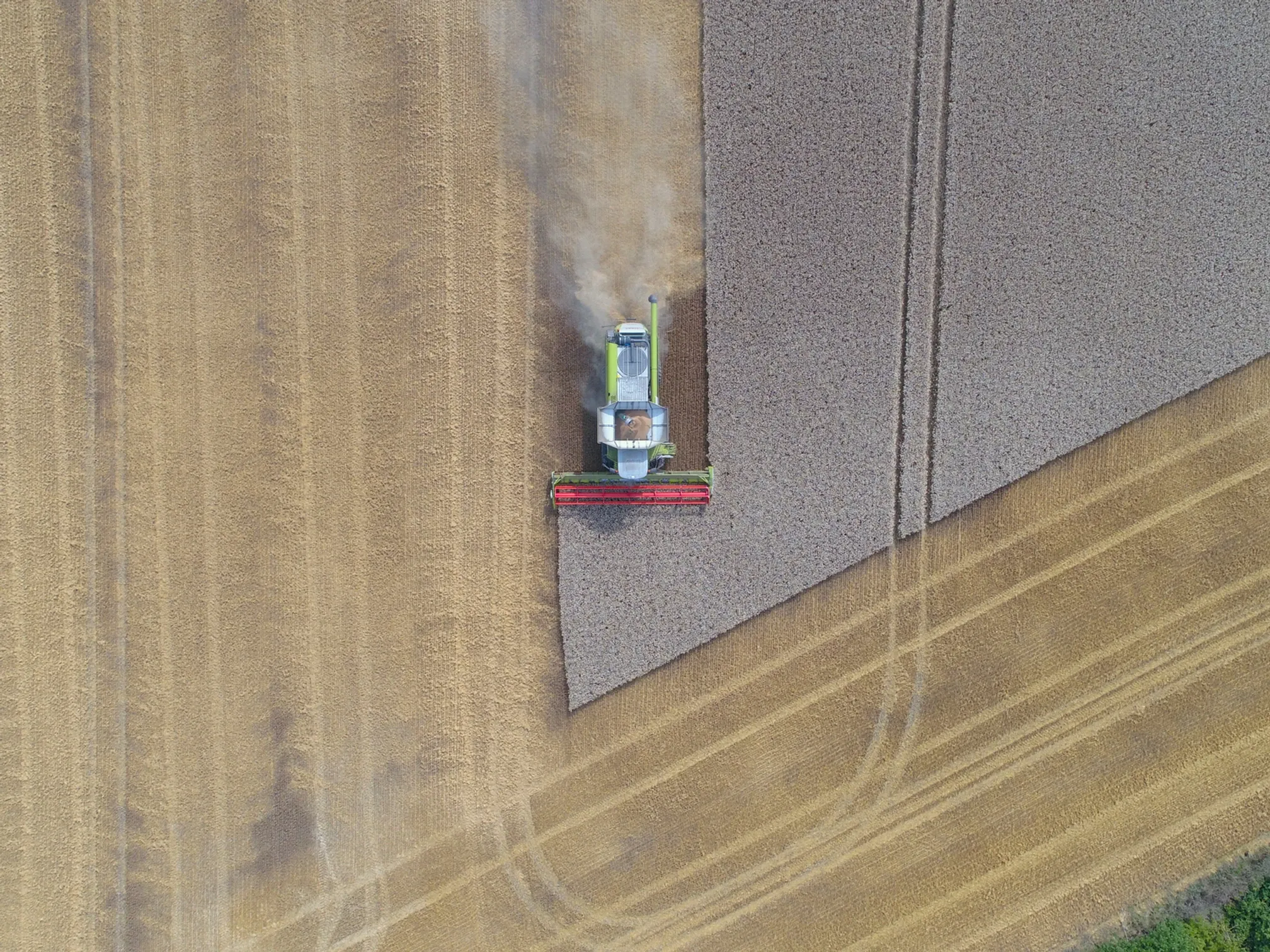
Geospatial analysis has played a crucial role in understanding the environmental impact of the war in Ukraine. Few areas of the Earth have been monitored so closely as Ukraine and particularly the areas directly affected by the conflict. Never before has there been access to such high-resolution Earth Observation Data from satellites, or through drone-based imaging, transforming the timeliness of imaging data, the spatial resolution, as well as the spectral resolution.

Techniques for processing this data speedily and with the use of AI to identify different spectral signatures created by contaminants or counting shell holes to assess the mechanical damage to the soil have also transformed the value of this raw data.

There is the opportunity to build up skills and expertise both in Ukraine, and amongst the Diaspora to fill the skills gap, as Geographical Information Systems (GIS) become fundamental to capturing and sharing this data today, and for planning the interventions needed to rebuild and resurrect the agricultural sector in the land directly affected by the war.

Here are some more detailed examples of how geospatial analysis has been used in this context:

1. Mapping environmental damage: Geospatial analysis has been used to map the extent and severity of environmental damage caused by the war. For example, satellite imagery has been used to identify areas where buildings and infrastructure have been destroyed, where oil spills have occurred, and where vegetation has been damaged or destroyed. This information has been used to create detailed maps of the environmental damage, which can be used to identify areas in need of environmental remediation and to plan for post-conflict reconstruction.

2. Monitoring pollution: Geospatial analysis has been used to monitor the release of pollutants into the environment. For example, satellite imagery has been used to track the movement of oil spills in rivers and other bodies of water. This information has been used to assess the extent of environmental damage and to plan for mitigation measures. Additionally, geospatial analysis has been used to monitor air pollution caused by the conflict, such as the release of pollutants from burning trash and debris.

3. Identifying vulnerable populations: Geospatial analysis has been used to identify populations that are particularly vulnerable to environmental damage. For example, satellite imagery has been used to identify areas where children, the elderly, and people with pre-existing health conditions are located. This information has been used to prioritize environmental remediation efforts and to plan for post-conflict reconstruction. Additionally, geospatial analysis has been used to identify areas where people are at risk of exposure to hazardous materials, such as areas near damaged industrial sites.

4. Planning for environmental remediation: Geospatial analysis has been used to plan for environmental remediation efforts. For example, geospatial analysis has been used to identify areas where contaminated soil and water need to be cleaned up, where damaged habitats need to be restored, and where the release of pollutants into the environment needs to be reduced. This information has been used to prioritize environmental remediation efforts and to allocate resources effectively. Additionally, geospatial analysis has been used to identify areas where environmental remediation efforts can be combined with other post-conflict reconstruction efforts, such as rebuilding infrastructure.


Understanding the environmental impact of the war in Ukraine

Geospatial analysis has been an essential tool in understanding the environmental impact of the war in Ukraine and in planning for post-conflict environmental remediation efforts.

Realising the opportunity will involve three factors:

Collaboration

To realise these opportunities there is a need for collaboration among governments, NGOs, researchers, and local communities in leveraging geospatial data for environmental remediation. The UN Environmental Working Group in Ukraine has played an important role in encouraging this kind of collaboration. One example is the collaboration to look at new techniques in environmental monitoring between National Agrarian University in Sumy, Ukraine and the Royal Agricultural University in the UK. This initial collaboration grown to include partners in the private sector and in Switzerland as well.

Multidisciplinary Approaches:

Multidisciplinary efforts are needed that combine geography, environmental science, computer science, and other fields. This recognises the complexity of environmental issues, and the different capacities needed in a comprehensive approach to remediation and rebuilding the agricultural sector, and ultimately global food security.

An agile approach to innovation

Advances in satellite technology, predictive analytics, and the integration of geospatial data with other data sources for more comprehensive analyses, are opening up new insights, uncovering new challenges, challenging the old ways of doing things and opening up the possibility of completely new solutions.

However major challenges exist

While we have focussed on the positive aspects of geospatial analysis, there are huge security challenges in sharing any data while the war continues. Security challenges create all kinds of limitations in collecting, processing, and interpreting data, and the real dividends of these technologies will only be seen when the war ends.


Continue reading

Revolutionizing Geospatial Analysis with AI: Transforming Data into Insights

Revolutionizing Geospatial Analysis with AI: Transforming Data into Insights

Geospatial analysis has always been a critical tool for understanding our environment and making informed decisions. However, the sheer volume and complexity of data from various sources like satellite imagery, drones, and ground-based sensors have made the analysis process more challenging.

With AI and machine learning, geospatial analysts can now process this vast a


mount of data more quickly and accurately, providing valuable insights that were previously difficult to obtain.

Here are some examples of how AI is changing geospatial analysis:


1. Automation: AI algorithms can automate several tasks in geospatial analysis, such as image classification, feature extraction, and data processing. For example, instead of manually identifying and classifying objects in satellite images, AI algorithms can do this automatically, significantly reducing the time and effort required for analysis.

2. Object Detection and Recognition: AI algorithms can accurately detect and recognize objects in geospatial data, such as buildings, roads, and vegetation. This capability is crucial for various applications, such as urban planning, disaster response, and environmental monitoring. For example, AI algorithms can identify the exact location and size of buildings in satellite imagery, helping urban planners to design more efficient and sustainable cities.

3. Predictive Analytics: AI models can analyze historical geospatial data to predict future events or trends. For example, machine learning models can predict the spread of diseases, track the movement of storms, and forecast land use changes. This capability can help decision-makers to plan for future events and make informed decisions.

4. Spatial Analysis: AI algorithms can perform spatial analysis to identify spatial patterns and relationships between geospatial features. This capability is essential for various applications, such as transportation planning, urban development, and natural resource management. For example, AI algorithms can analyze traffic patterns to identify the most efficient routes for transportation.

AI is revolutionizing geospatial analysis by enabling geospatial analysts to process vast amounts of data more quickly and accurately.

With automation, object detection and recognition, predictive analytics, and spatial analysis, AI is providing geospatial analysts with valuable insights that can help them make more informed decisions.


As AI continues to evolve, we can expect geospatial analysis to become even more advanced, enabling us to better understand and protect our environment more effectively.

Continue reading